InchHarbor editorial research · October 8, 2026 · Manufacturer specifications and original measurement examples. No hands-on product testing.
Record three different heights
- Available height: measure vertically from the support surface to the lowest obstruction over the rack. Check cabinet trim, lights and door movement, not just the cabinet box.
- Loaded height: measure to the highest point of a normally loaded rack. A tall plate, cutting board or utensil may set the limit.
- Removal path: check the extra room needed to grasp, lift and turn the tallest item without striking the cabinet or another dish.
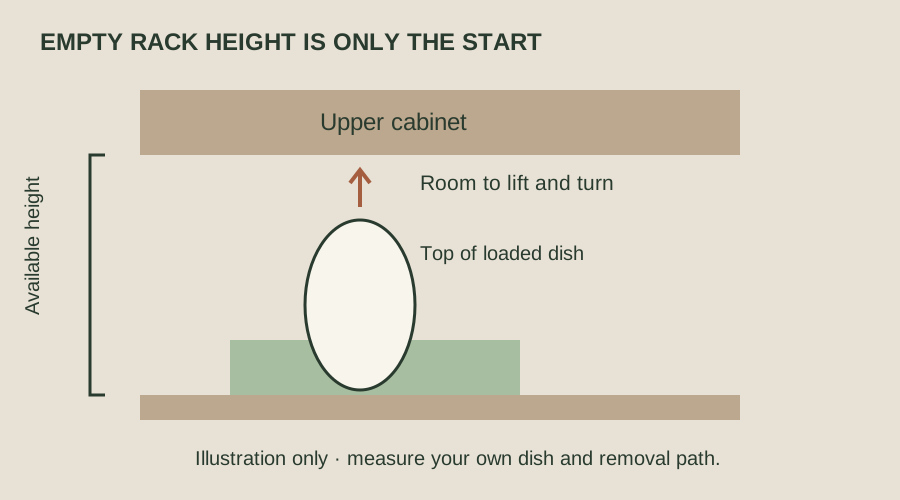
An 18-inch example, without a product claim
Imagine a measured 18-inch gap. If an actual loaded setup reaches 14 inches and your removal motion needs another 3 inches, it occupies 17 inches and leaves 1 inch. If the same motion needs 5 inches, it needs 19 inches and fails. These are invented teaching measurements, not measurements of any product in our catalogue.
Do not automatically add the rack's full frame height to a plate's diameter. The plate may sit within the frame, lean at an angle, or rest on an elevated support. If the manufacturer does not document loaded height, label it unknown. Ask for the relevant measurement or wait for a real measurement before treating a tight gap as a confirmed fit.
Use a cardboard outline before shopping
Mark the proposed base on the counter. Hold a cardboard outline of your tallest normal dish where its support would be, without balancing glassware or sharp items in an unstable mock-up. Try the removal motion. This can reveal an obviously poor location; it cannot prove the final rack's slot geometry or stability.
Open nearby cabinet doors and turn the faucet through its usual motion. Consider whether you can reach the tap with dishes loaded, and whether the drain can discharge into the sink without pooling on the counter.
What our five-model comparison can answer
Our dish rack comparison supplies manufacturer body dimensions and configuration differences. It does not contain independently measured loaded heights. The Fit Finder screens rectangular body dimensions and margins; a positive result still needs this manual clearance check.
Your pre-purchase checklist
- Counter-to-obstruction height measured at the planned position.
- Open/in-use body dimensions confirmed for the exact model.
- Tallest dish and utensil accounted for.
- Lift-out motion, faucet access and cabinet doors checked.
- Stable support and drain alignment checked separately.
Record the results on the printable measuring worksheet. For shallow counters, see our 12-inch-depth comparison.
Research basis
This is an original measurement workflow, not a product test. Manufacturer body-size sources are linked on the comparison page. No universal loaded-height or lifting allowance is asserted. Read how we handle missing measurements.